
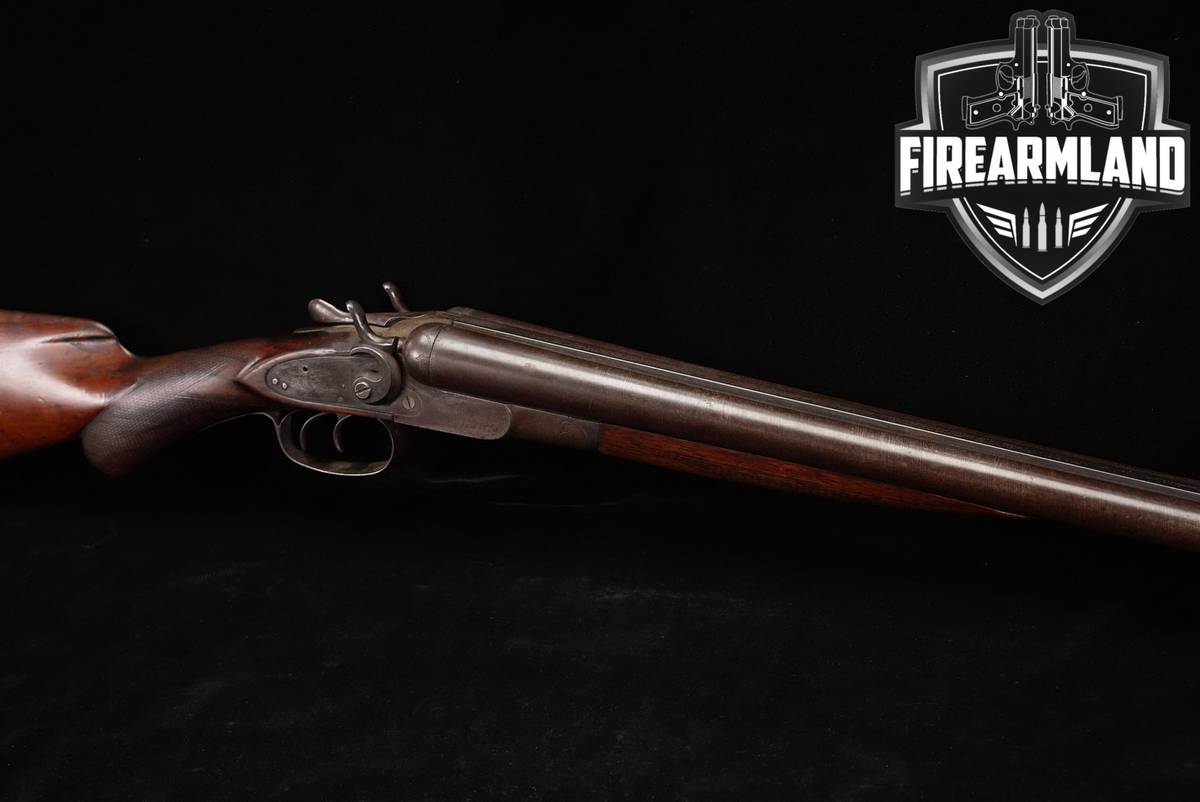
George W. Gemmill Gunsmith-Built 12 Gauge Side-by-Side, 26 in Damascus Barrels, External Hammers, c. 1890s New York
This antique, custom-built 12-gauge side-by-side by New York gunsmith George W. Gemmill dates to the 1890s and features 26-inch Damascus barrels, external hammers, and back-action sidelocks. Marked "GEO. W. GEMMILL" and "PAT'D NOV.
8, 90," it is a period-correct, extractor-only, double-trigger shotgun built for blackpowder loads. Its walnut stock and forend show hand-cut checkering, and the steel buttplate carries a hunting-dog medallion detail.
Condition
Overall Condition: Fair condition, showing extensive signs of prior use and handling.
Bore Condition: Fair - Generally clean, some residue or smudges, slight corrosion.
Specific Condition Notes: The original finish has transitioned to a grey-brown patina. There is carbon build-up in the bores. The wood furniture shows various scratches, handling marks, and dings.
What's Included
- Gemmill 12-gauge side-by-side shotgun
Gunsmith-built by George W. Gemmill in New York in the late 1800s, this break-action, external-hammer shotgun reflects quality American custom work of the era. It uses double triggers and back-action sidelocks, with a two-shot capacity and extractor-only operation.
The 26-inch Damascus steel barrels have a matted rib with a front bead and a rib extension. The gun is specifically intended for blackpowder 12-gauge loads, consistent with its period construction and barrel material.
This shotgun is made for blackpowder loads only; do not attempt to fire modern ammunition through this firearm.
The walnut stock features a rounded pistol-grip and hand-cut checkering, paired with a splinter forend secured by a lever latch. A checkered steel buttplate with a central hunting-dog medallion adds a tasteful period embellishment. Length of pull measures 14.0 inches.
Period markings include "GEO. W. GEMMILL" and "PAT'D NOV. 8, 90." Matching serial markings appear on multiple parts, aligning with bespoke assembly practices of the time. This United States-made, 1890s piece is a notable custom example for those interested in American gunsmith-built doubles.