
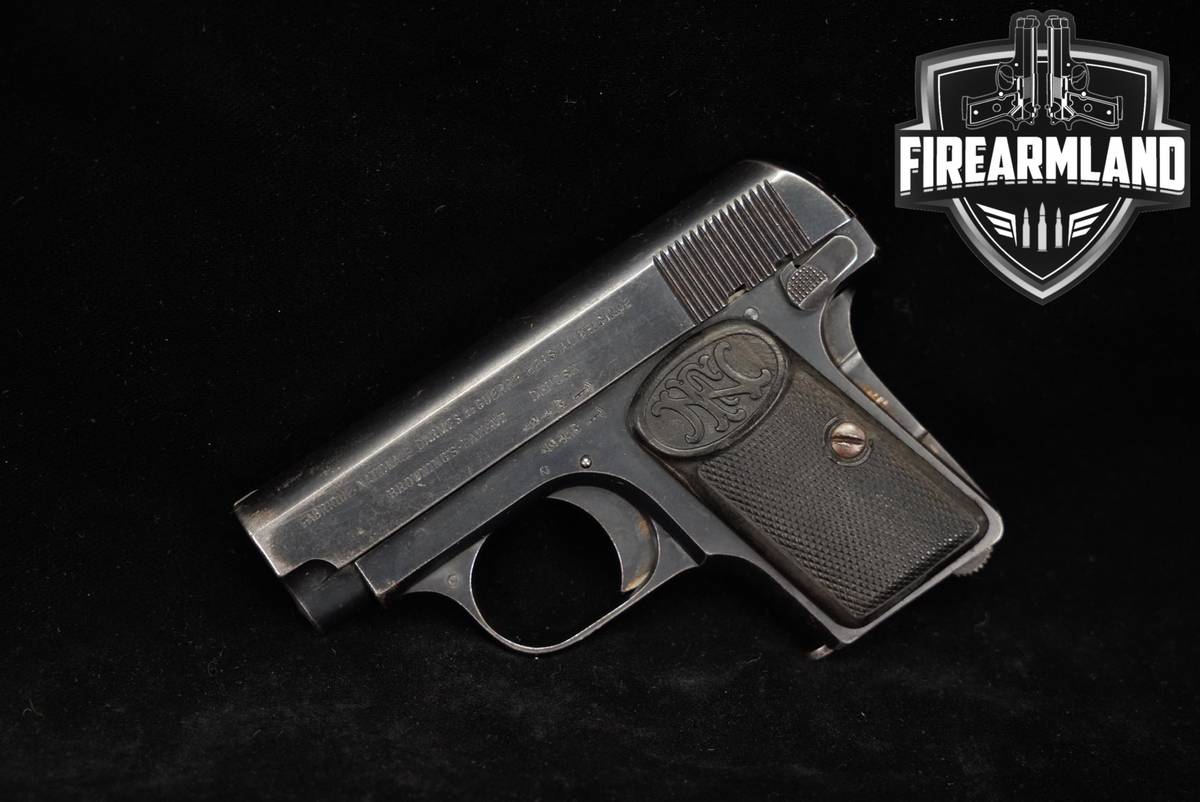
FN Browning Model 1906 Vest Pocket, Second Type Two-Safety, .25 ACP, Belgian, 2.1 in Barrel (1910–1911), Blued
This FN Browning Model 1906 is a second-type two-safety "Vest Pocket" pistol from the 1910–1911 era, designed by John M. Browning and produced in Belgium by FN Herstal. It features the early FN commercial slide legends, Belgian proofmarks, and a polished blue finish typical of pre-WWI FN production. Its micro size, integral trough-style sights, and classic FN monogram grips define this compact, period-correct example.
Condition
Overall Condition: Good condition, showing some signs of prior use and handling.
Bore Condition: Good - Clean, well-maintained, minor wear marks.
Bore Rifling: Good Rifling - Intact, well-defined lands and grooves.
Specific Condition Notes: Light handling marks from prior use. Please refer to the photos for a closer look.
What’s Included
- FN Browning Model 1906 "Vest Pocket" pistol (Second Type, Two-Safety), .25 ACP
The Model 1906 is FN’s micro-size Browning-designed vest-pocket pistol, chambered in .25 ACP (6.35 mm Browning). This example dates to 1910–1911 and bears Belgian proofmarks, aligning with early commercial production. The slide is marked with the period-correct legends: “FABRIQUE NATIONALE D’ARMES DE GUERRE HERSTAL–BELGIQUE” over “BROWNING’S PATENT DÉPOSÉ.”
Mechanically, it is a simple blowback, single-action, striker-fired design with a two-safety configuration: a grip safety and a manual thumb safety. It uses a heel-type magazine release common to European vest-pocket pistols and offers a 6-round single-column capacity.
Construction is machined carbon steel with a polished blued finish. The slide has rear vertical serrations and a right-side oval ejection port. Grips are checkered hard rubber with the oval FN monogram, each secured by a single screw.
Sighting equipment is fixed and integral: an integral front sight paired with a shallow rear notch forming a trough-style sighting plane. Dimensions are appropriately compact, with an approximate 2.1 in barrel and about 4.1 in overall length—true to the vest-pocket concept of the period.