
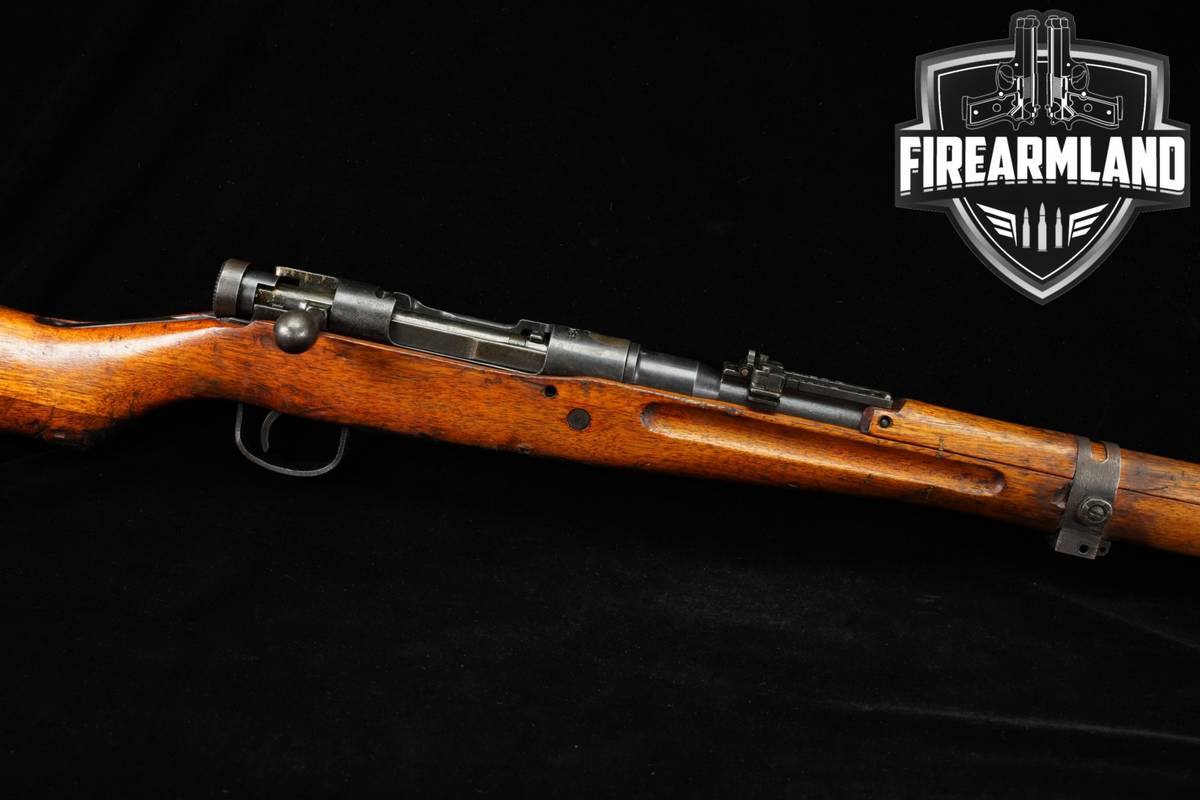
Nagoya Arsenal Type 99 Arisaka Short Rifle, 7.7 Japanese, 26-inch Barrel, WWII-Era Bolt-Action
This Nagoya Arsenal Type 99 Short Rifle is a WWII-era Japanese bolt-action chambered in 7.7 Japanese with a 26-inch barrel. It features the correct two-piece hardwood stock with visible splice, full-length top handguard, and a tangent rear sight graduated to 1500 m without anti-aircraft wings. A protected blade front sight, large knurled push-and-rotate safety knob, and Nagoya arsenal markings (circled arsenal mark and kana prefix near the serial) round out a configuration that aligns with wartime production. The imperial chrysanthemum crest is not present.
Condition
Overall Condition: Fair condition, showing extensive signs of prior use and handling.
Bore Overall Condition: Good - Clean, well-maintained, minor wear marks.
Bore Rifling: Good Rifling - Intact, well-defined lands and grooves.
Specific Condition Details: There are several gouges and scuffs on the stock. The metal shows mild wear. The bore and rifling are in fairly good shape.
What’s Included
- Nagoya Arsenal Type 99 Arisaka Short Rifle chambered in 7.7 Japanese
Built at Nagoya Arsenal, this Type 99 Short Rifle presents the classic WWII configuration with a 26-inch barrel and a blued steel receiver. The two-piece hardwood stock with visible splice is paired with side sling loops and a steel buttplate, matching period-correct assembly features.
The sighting system consists of a tangent ladder rear sight graduated to 1500 m (without anti-aircraft wings) and a protected blade front sight with ears. The action uses a large, knurled push-and-rotate rear safety knob and a bolt-action mechanism feeding from a fixed internal 5-round magazine.
Up front, the nose cap incorporates a bayonet lug and a cleaning-rod channel; the rod is absent. This example does not have a bolt dust cover, and the rifle retains a blued finish throughout the metalwork.
Markings include a circled arsenal mark and a kana prefix near the serial. The imperial chrysanthemum crest is not present. These details, along with its WWII-era origin and correct short-rifle pattern, make it a solid representative of Japanese service rifles from the period.