
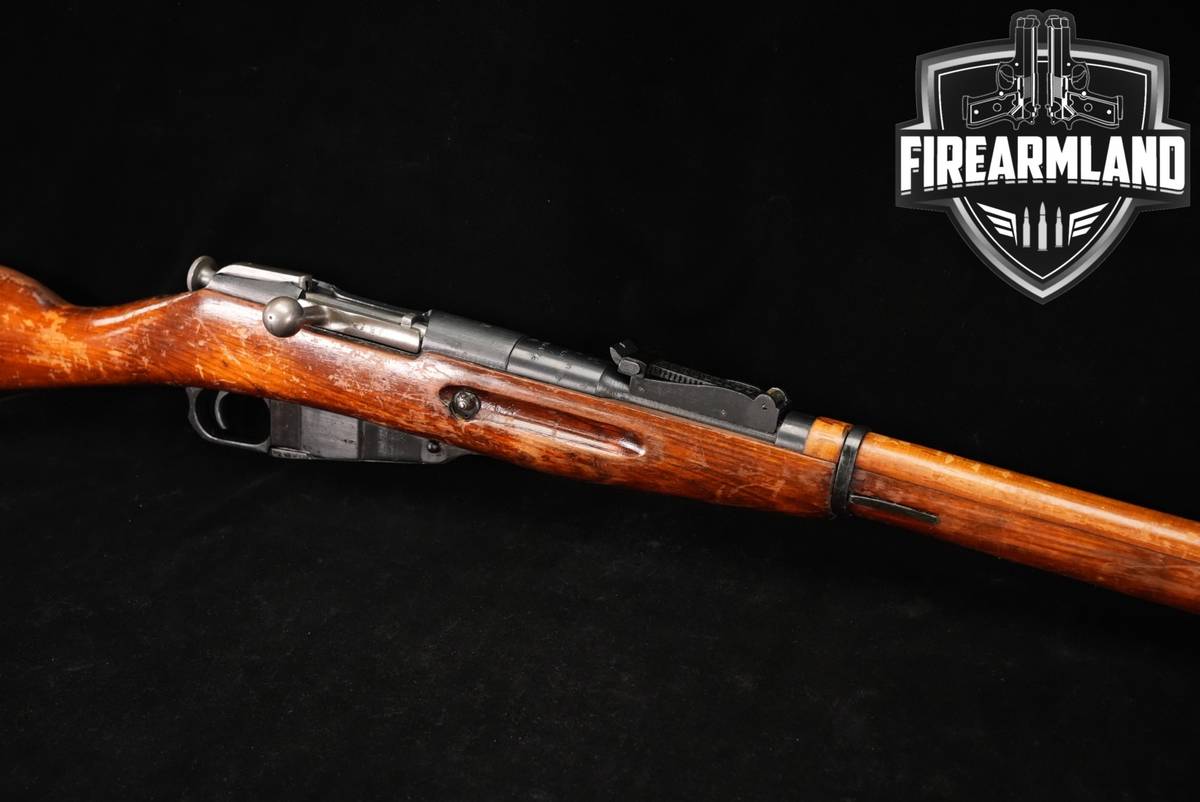
Izhevsk Mosin-Nagant 91/30 Round Receiver 7.62x54R, 29" Barrel, WWII 1943, Bolt & Floorplate Matching; Mismatched Buttplate
wartime-produced 1943 Izhevsk Arsenal Mosin-Nagant Model 91/30 with the round receiver, chambered in 7.62x54R. It retains its 29-inch barrel, blued steel finish, and hardwood furniture, with matching assembly numbers observed on the bolt and floorplate; the buttplate is mismatched. Authentic Izhevsk crest and importer markings are present.
Condition
Overall Condition: Good condition, showing some signs of prior use and handling.
Bore Condition: Good - Clean, well-maintained, minor wear marks.
Bore Rifling: Good Rifling - Intact, well-defined lands and grooves.
Specific Condition Notes: This firearm is in solid shape for its age. It has various cosmetic imperfections, scratches, and blemishes with areas of finish loss. The bore remains reasonably clean and shiny.
What’s Included
- Under-barrel cleaning rod (installed)
Produced at Izhevsk in 1943 (marked "1943г"), this 91/30 features the desirable round receiver and a straight bolt handle. It is chambered in 7.62x54R and built on a blued steel receiver and barrel with the standard 29-inch length.
The rifle wears a full-length hardwood stock with a separate top handguard, two sling slots, and two barrel bands with spring retainers. Sights are the correct military pattern: a hooded post front and a tangent ladder rear, offering a classic service-rifle sight picture.
Its internal fixed magazine uses the Mosin-Nagant interrupter/ejector system to manage rimmed cartridges and was designed to be used with stripper clips and the cruciform socket bayonet (not included). The under-barrel cleaning rod remains installed.
Markings are extensive and clear, including the Izhevsk Arsenal arrow-in-triangle crest on the barrel shank, "M91/30 RUSSIA 7.62x54R" import mark, "CAI GEORGIA, VT" import mark, and an importer-applied serial on the right side of the barrel shank. Bolt and floorplate share matching assembly numbers; the buttplate is mismatched, adding to its appeal as a correct WWII-era example from the USSR.