
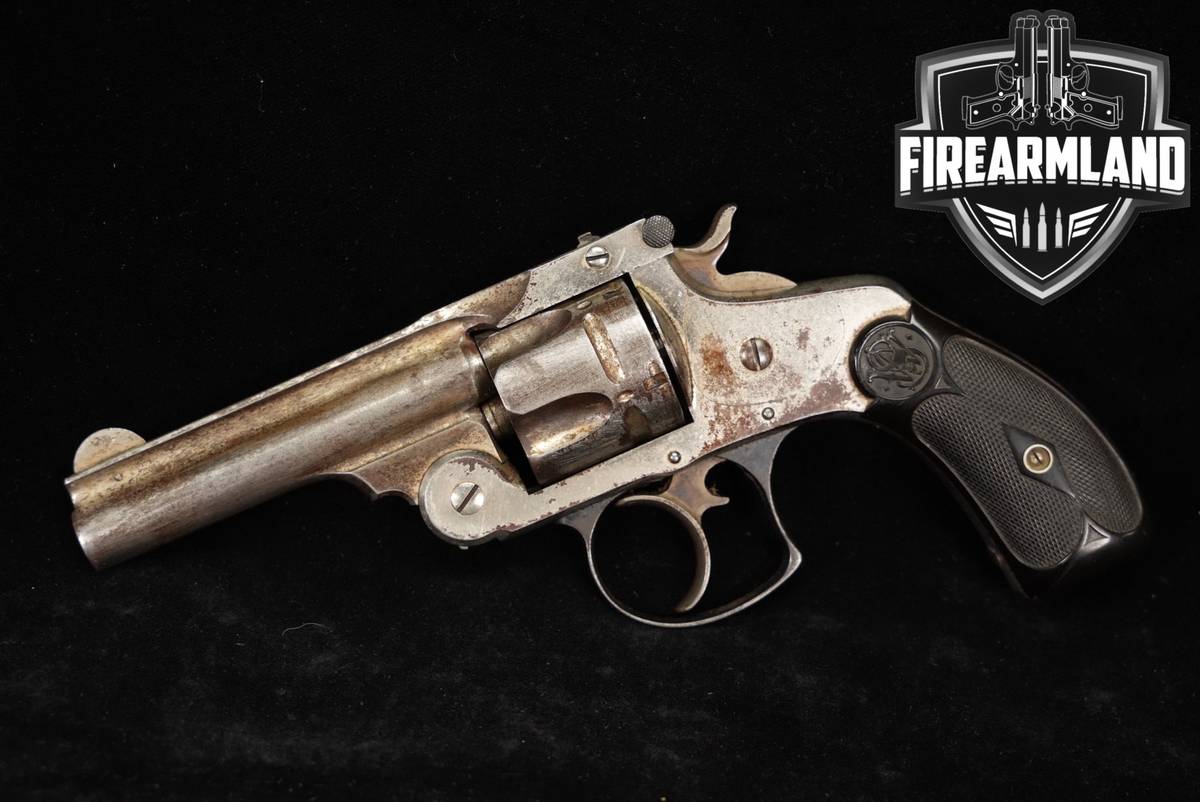
Smith & Wesson .38 Double Action Second Model, .38 S&W, 3.25 inch Top-Break, 5-Shot, Nickel, Antique (1884–1887)
This antique Smith & Wesson .38 Double Action Second Model stands out for its early top-break, double-action/single-action design with automatic simultaneous ejection and a compact 3.25 inch barrel. Chambered in .38 S&W with a five-shot fluted cylinder and finished in nickel, it features checkered hard-rubber grips with S&W monograms. The serial number is stamped on the butt and falls within the documented Second Model range, aligning it with production from approximately 1884–1887.
Condition
Overall Condition: Poor condition.
Bore Overall Condition: Fair - Generally clean, some residue or smudges, slight corrosion.
Bore Rifling: Fair Rifling - Worn rifling, slight loss of definition.
Specific Condition Notes: There is rust and visible blemishing throughout. The firearm does fire; however, the single-action function does not operate and the hammer will not lock into place, indicating it will need gunsmithing. The bore shows small craters or pockets. Rifling is visible, though the edges of the lands are rounded or softened from use.
What’s Included
- Smith & Wesson .38 Double Action Second Model revolver
The Second Model configuration retains the classic S&W top-break system with a knurled top-latch thumbpiece and an automatic star extractor that ejects all cases simultaneously when opened. Its five-shot fluted cylinder and round-butt grip frame keep the profile compact while preserving period-correct ergonomics.
The 3.25 inch steel barrel includes a rib with multi-line S&W address and patent rollmarks. Sights are fixed, pairing a pinned half-moon front sight with a rear notch integral to the top latch for a purposeful, low-profile sight picture.
Construction is all-steel with a nickel finish on the frame and cylinder. The revolver wears checkered hard-rubber grips featuring S&W monograms, consistent with factory style of the era.
As an antique revolver produced in the 1884–1887 era and made in the United States, this example aligns with known Second Model characteristics. The serial number is located on the butt and falls within the recognized range for this series, supporting its identification and period placement.