
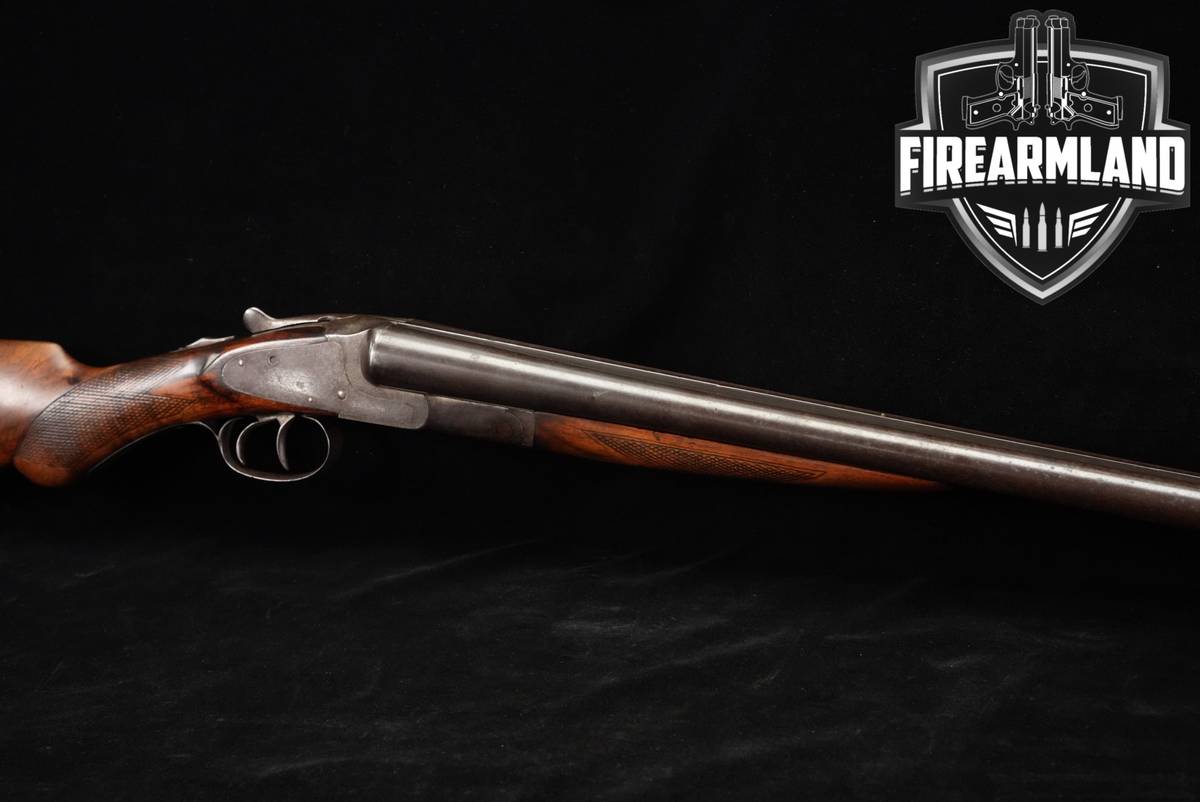
Hunter Arms L.C. Smith No. 00 Grade 12 Gauge Side-by-Side, 30" Armor Steel Barrels, Double Triggers, Extractor, 1911–1912
This L.C. Smith No. 00 Grade 12-gauge by Hunter Arms Company is a classic American sidelock built in Fulton, New York, with hallmark Armor Steel 30-inch barrels. It features a doll's head rib extension, double triggers, extractor, and tang safety, with matching serial numbers on the forend metal, barrel flats, and watertable. Patent date markings and a concave matted rib with front and mid beads add to its period-correct details from the 1911–1912 production window.
Condition
Overall Condition: Good condition, showing some signs of prior use and handling.
Bore Condition: Good - Clean, well-maintained, minor wear marks.
Bore Fouling: Mild Fouling - Light buildup of fouling or dirt.
Specific Condition Notes: The action exhibits a fairly tight barrel fit. The buttstock has a few small holes; the cause is unknown and may be from prior insect damage or an old alteration.
What’s Included
- Hunter Arms L.C. Smith No. 00 Grade 12-gauge side-by-side shotgun
Built as a true sidelock with a top-lever action, this No. 00 Grade carries the classic L.C. Smith rib extension (doll's head) for secure lockup and an extractor (non-ejector) setup. The double triggers and tang safety provide a traditional control layout favored on vintage American doubles.
The 30-inch Armor Steel barrels wear a concave, matted top rib with a front brass bead and a small mid bead for clean sight alignment. "ARMOR STEEL" is present among the markings, consistent with the period construction.
The walnut furniture includes a pistol-grip stock and splinter forend, both with hand-cut checkering. It is finished with a black composition buttplate featuring horizontal serrations. Length of pull measures 14.25 inches.
Grade "00" is marked on the watertable, with patent dates "PAT'D OCT. 5. 86" and "PAT'D JULY 13. 86" also noted. Matching serial numbers appear on the forend interior metal, barrel flats, and watertable.
Manufactured in the United States during the 1910s, this example aligns with 1911–1912 production.