
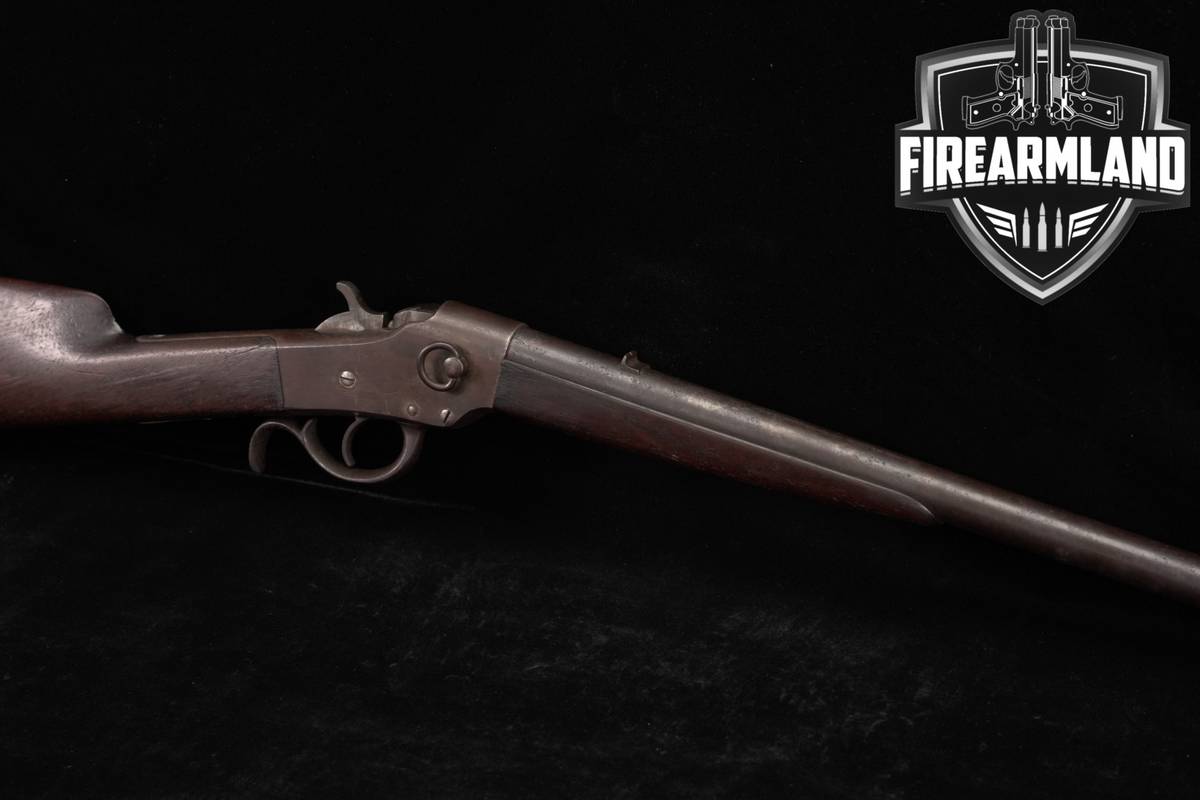
Hopkins & Allen Junior .22 Single-Shot Underlever Falling Block Rifle, 22" Barrel, Blued, Wood Stock
This Hopkins & Allen Arms Company Junior is a single-shot boys' rifle built with an underlever-operated falling block and exposed hammer, representative of the American boys' rifle movement circa the turn of the 20th century. It features a 22" round steel barrel, blued finish, plain wood furniture, and an offset rimfire firing pin aperture. It is chambered for .22 Short, .22 Long, and .22 Long Rifle, making it a versatile rimfire classic for collectors of early American single-shots.
Condition
Overall Condition: Fair condition, showing extensive signs of prior use and handling.
Bore Overall Condition: Fair - Generally clean, some residue or smudges, slight corrosion.
Bore Rifling: Poor Rifling - Rifling heavily worn or filled with fouling or debris.
There is widespread rust and pitting with a patina over the remaining finish. Scratches and blemishes are visible on metal and wood. The bore appears dark and constricted, and the rifling is difficult to observe.
What’s Included
- Hopkins & Allen Arms Company Junior single-shot rifle
The Junior uses an underlever that also forms the trigger guard to actuate a falling-block breech, paired with an exposed hammer and an offset rimfire firing pin aperture. This simple, durable mechanism reflects the design priorities of early American training and boys' rifles.
Its 22" round steel barrel has provision for open sights, with a front blade and a barrel dovetail for a rear sight. The rifle is chambered for .22 Short, .22 Long, and .22 Long Rifle, with a single-round capacity.
The furniture is plain and functional, with an uncheckered straight-grip wood stock, matching wood forend, and a curved steel buttplate. The barrel and receiver are finished in blued steel on a flat-sided receiver secured with multiple screws.
Made in the USA by Hopkins & Allen Arms Company, the Junior is associated with the Hopkins & Allen 9-series single-shots and some Merwin & Hulbert-marketed examples. It stands as a notable representative of the American boys' rifle tradition from the era.